Low Boiler Pressure? Repressurise Your Combi Boiler
By The FixDelivered Team · Updated 2026-08-10 · 5 min read
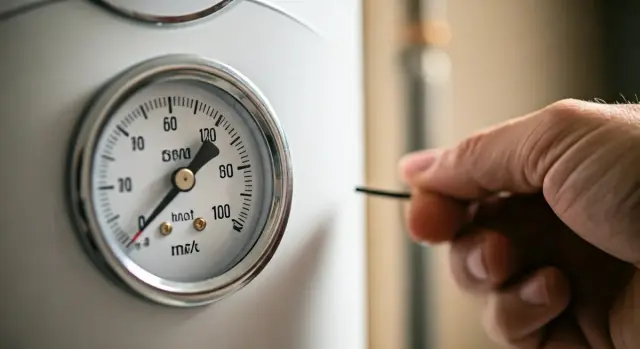
If your central heating isn't performing as it should, or you've noticed a fault code on your combi boiler, one common culprit is low system pressure. Fortunately, repressurising your combi boiler is a straightforward task that many homeowners can safely carry out themselves.
Understanding Your Combi Boiler's Pressure
A combination (combi) boiler provides both heating and hot water directly from the mains, without the need for a separate hot water cylinder or cold water tank. For the system to work efficiently and safely, it needs to maintain a specific water pressure.
Most combi boilers operate optimally when cold at a pressure between 1 and 1.5 bar. You can check this on the boiler's built-in pressure gauge, which is usually a dial or a digital display on the front panel. If the needle drops below 1 bar, or into a red section, your boiler pressure is likely too low.
Symptoms of Low Boiler Pressure
- Radiators not heating up properly, or only partially warm.
- A noticeable drop in hot water flow or temperature.
- The boiler making unusual noises.
- A fault code or warning light appearing on the boiler's display.
- The boiler switching itself off.
Why Does Boiler Pressure Drop?
Pressure loss is usually due to one of two main reasons:
- Minor Leaks: Even a tiny, unnoticeable leak in your heating system (e.g., from a radiator valve, pipe joint, or the boiler itself) can gradually cause pressure to drop over time.
- Bleeding Radiators: When you bleed air from your radiators, you also release a small amount of water. If you bleed several radiators, or do it frequently, this can lead to a noticeable pressure drop.
DIY Guide: How to Repressurise Your Combi Boiler
Before you begin, ensure you know where your boiler's filling loop is. This is a small, often braided hose with a valve at each end, used to connect the central heating system to the mains water supply. Some boilers have an internal filling loop (built-in), while others have an external one.
Tools You Might Need
- A towel or old cloth (to catch any drips).
- A small screwdriver (for some older external filling loops).
Safety Cautions
- Always turn off your boiler and allow it to cool down before repressurising. This prevents hot water from scalding you and protects the boiler's components.
- Do not over-pressurise your system. Watch the gauge carefully and stop once the desired pressure is reached. Over-pressurising can damage your boiler and heating system.
- If you are unsure at any point, or if the pressure drops rapidly and repeatedly, do not attempt to fix it yourself. Always call a qualified professional.
Step-by-Step Repressurising Process
- Turn Off and Cool Down: Switch off your boiler at the main power supply and allow it to cool completely. This is crucial for safety.
- Locate the Filling Loop: Identify your boiler's filling loop. If it's internal, it will be a small lever or key often found underneath the boiler. For external loops, it's a flexible metal hose connecting two pipes, usually with black valves.
- Connect/Open the Filling Loop:
- For External Filling Loops: Ensure both ends of the flexible hose are securely attached. Open the two valves on the filling loop. You might need to turn them anti-clockwise.
- For Internal Filling Loops: Turn the small lever or key on the boiler itself, usually anti-clockwise, to open the internal valve.
- Watch the Pressure Gauge: As you open the valve(s), you'll hear water flowing into the system. Keep a close eye on the pressure gauge. The needle should start to rise. Aim for a cold pressure reading of between 1 and 1.5 bar (typically in the green zone).
- Close the Filling Loop: Once the desired pressure is reached, immediately close the valve(s) on the filling loop.
- For External Filling Loops: Close both valves tightly (clockwise). Then, if it's detachable, disconnect the flexible hose and store it safely. It's good practice to do this to prevent accidental over-pressurisation.
- For Internal Filling Loops: Turn the lever or key back to its closed position (clockwise).
- Restart Your Boiler: Switch your boiler's power supply back on. It should now operate normally.
What to Do After Repressurising
Monitor your boiler's pressure over the next few days. If the pressure drops again quickly, it indicates a persistent leak in your system, which will require professional attention.
When to Call a Professional
While repressurising is often a simple DIY fix, there are times when you absolutely need to call a qualified plumber or a Gas Safe registered engineer:
- Persistent Pressure Drops: If you find yourself needing to repressurise your boiler frequently (e.g., weekly or monthly), it's a strong indicator of a leak in your system that needs to be located and repaired.
- Visible Leaks: If you can see water leaking from your boiler, pipes, or radiators, turn off your boiler and heating system immediately and contact a professional. For urgent leaks, you can find emergency plumbers near you through FixDelivered.
- No Filling Loop or Can't Locate It: If you can't find or access your filling loop, or if you're unsure how to operate it.
- Over-Pressurisation: If you accidentally put too much water into the system and the pressure exceeds 2.5-3 bar, you might need to bleed a radiator to release some pressure. If you're unsure, call a professional.
- Boiler Faults: If repressurising doesn't resolve the issue, or if the boiler displays other fault codes.
- Gas-Related Concerns: Any work involving the internal components of a boiler, especially gas connections, must ONLY be carried out by a Gas Safe registered plumber. Never attempt to open your boiler's casing yourself.
A plumber's call-out fee to diagnose a persistent pressure drop or a leak typically ranges from £60-£90 for a standard visit, potentially £90-£150+ for an emergency call-out in 2026, with repair costs extra depending on the complexity of the job.
If you're facing persistent low pressure or a leak, don't delay. You can easily find a local plumber through FixDelivered. Our service makes it simple to tell us your emergency and connect with qualified professionals quickly.
For more useful advice on common household plumbing issues, explore our plumbing emergency guides.
Frequently asked questions
What is the ideal pressure for a combi boiler?
The ideal cold pressure for most combi boilers is between 1 and 1.5 bar. When the system heats up, the pressure will naturally rise slightly, usually to around 2 bar.
How often should I repressurise my boiler?
Ideally, you shouldn't need to repressurise your boiler very often. If you find yourself doing it more than once or twice a year, it suggests there might be a small leak in your system that needs professional investigation.
Can I ignore low boiler pressure?
No, it's not advisable to ignore low boiler pressure. Your boiler will likely become inefficient, struggle to heat your home or provide hot water, and may eventually shut down completely as a safety measure, potentially leading to further issues.
What if my boiler pressure keeps dropping after I repressurise it?
If your boiler pressure repeatedly drops after repressurising, it indicates a leak somewhere in your central heating system. This could be in the boiler itself, pipes, or radiators. You should contact a qualified plumber or Gas Safe registered engineer to diagnose and fix the leak.
Need a plumber now? Tell us your emergency and FixDelivered will find and confirm an available local plumber near you, usually within the hour.
Written by the FixDelivered Team. Reviewed by Rupert Lowe, Editor. Last updated 2026-08-10.