Advice & guides › Hiring a Plumber
Water Company or Plumber: Who Fixes Your Pipes?
By The FixDelivered Team · Updated 2026-08-31 · 5 min read
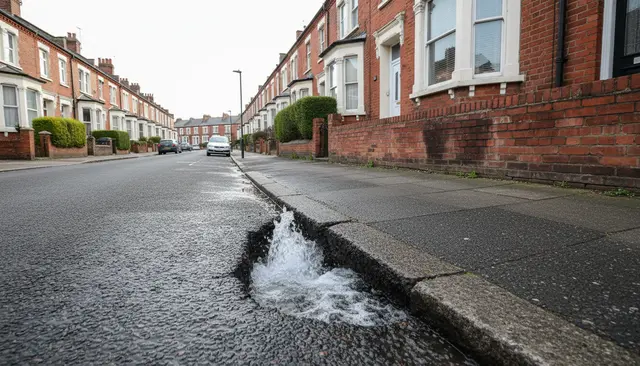
When a water issue strikes, one of the first and most critical questions is: whose pipe is it? Is the problem on your property, making it your responsibility to call a plumber, or does it fall under the local water company’s remit? Understanding the distinction can save you time, money, and a lot of frustration.
Understanding Your Water Supply System
Your property’s water supply system is typically divided into sections, with different parties responsible for each. In the UK, this division usually occurs at your property boundary or the main stop tap.
The Communication Pipe (Water Company's Responsibility)
This pipe carries water from the main water supply in the street to your property’s boundary. It’s almost always the responsibility of your local water company. If there’s a leak or issue on this section, they are legally obliged to fix it at no cost to you.
The Stop Tap or Boundary Box
Often located at the edge of your property, usually in a footpath or verge, this is the main stopcock for your home. It allows you or the water company to turn off the water supply to your property. The stop tap itself and the connection to the communication pipe are typically the water company’s responsibility.
The Supply Pipe (Homeowner's Responsibility)
This pipe runs from your property’s stop tap (or boundary box) into your home. Once the water has passed the stop tap, the supply pipe and all internal plumbing within your property become your responsibility as the homeowner. This means any leaks, bursts, or issues on this section of pipework are yours to fix.
Internal Plumbing (Homeowner's Responsibility)
All pipework, taps, toilets, showers, and appliances inside your home are unequivocally your responsibility. This also includes any pipework in your garden, such as outdoor taps or irrigation systems, that connects to your internal supply.
How to Determine Responsibility
The key to knowing whether to call the water company or a plumber lies in identifying where the problem is located:
- If the leak is in the street or pavement outside your property boundary, it’s most likely the communication pipe and therefore the water company’s problem. You might notice water bubbling up from the ground or a visible damp patch.
- If the leak is between your property boundary and your external stop tap, it’s also likely the communication pipe and the water company’s responsibility.
- If the leak is between your external stop tap and your house, or anywhere inside your home, then it’s on your supply pipe or internal plumbing, making it your responsibility.
- Low water pressure across your entire street or neighbourhood could indicate an issue with the main supply, suggesting the water company’s involvement. Low pressure affecting only your property, however, is typically an internal plumbing issue.
A good starting point is to check your external stop tap. If water is escaping before this point, it’s likely the water company’s issue. If the leak is after it, it’s yours.
When It's the Water Company's Job
If you suspect the issue is with the communication pipe or the main stop tap, you should contact your local water provider immediately. They have a duty to maintain their infrastructure and will usually send an engineer to investigate and carry out repairs at no charge to you. You can usually find their emergency contact number on your water bill or their website.
When It's Your Job (Homeowner's Responsibility)
If the problem is with your supply pipe or any internal plumbing, you’ll need to arrange for a qualified plumber to assess and fix the issue. Common problems include:
- Leaking or burst pipes: Often caused by age, corrosion, or freezing.
- Low water pressure: Can be due to blockages, leaks, or faulty stopcocks within your property.
- Faulty taps or toilets: Dripping taps, constantly running toilets, or issues with cisterns.
- Boiler and heating system issues: While a plumber can address water-related issues, remember that anything involving gas boilers must be handled by a Gas Safe registered plumber.
For any of these issues, it’s crucial to act quickly to prevent further damage. The first step is often to locate and turn off your internal stopcock to prevent more water escaping. This is usually found under the kitchen sink, in a utility room, or under the stairs.
A plumber's call-out fee in the UK typically ranges from £70 to £120, with hourly rates between £50 and £90. Repairs for a standard leak might cost £150-£350, while a burst pipe could be £200-£500+, depending on accessibility and severity. These are rough 2026 guides and can vary by region and the plumber's experience.
When you need a professional, reliable plumber fast, FixDelivered can connect you with emergency plumbers near you. Our service helps you find qualified local tradespeople quickly, with call-out fees agreed upfront and paid directly to the plumber. You can learn more about how FixDelivered works on our site.
What to Do in an Emergency
- Turn off your internal stopcock: This is the most important immediate action to limit water damage.
- Turn off your external stop tap (if safe and accessible): This provides an extra layer of protection.
- If the issue is clearly on the water company's side: Contact your local water provider immediately.
- If the issue is on your side: Contact a qualified plumber. You can tell us your emergency and we’ll help you find a local professional quickly.
- Clear away standing water: Mop up any water to prevent further damage to flooring or furnishings.
Knowing who is responsible for which part of your water supply pipe can save you significant time and stress when a problem arises. Always err on the side of caution and call the appropriate professional – either your water company or a trusted plumber – to ensure the issue is resolved safely and efficiently.
For more advice and guides on common plumbing emergencies, explore our plumbing emergency guides.
Frequently asked questions
How do I find my external stop tap?
Your external stop tap is usually located at the boundary of your property, often in the pavement or verge. It might be under a small metal or plastic cover marked 'Water' or 'W'. You may need a stopcock key to open it.
What is a communication pipe?
The communication pipe is the section of pipe that carries water from the main water supply in the street to the boundary of your property, up to your stop tap. This section is typically the responsibility of your local water company.
What is a supply pipe?
The supply pipe is the section of pipe that runs from your external stop tap (at your property boundary) into your home. This section, and all internal plumbing, is typically the homeowner's responsibility.
Who pays for a burst pipe repair?
If the burst pipe is on the communication pipe (before your external stop tap), your water company usually pays for the repair. If it's on your supply pipe or internal plumbing, you, as the homeowner, are responsible for the cost.
Need a plumber now? Tell us your emergency and FixDelivered will find and confirm an available local plumber near you, usually within the hour.
Written by the FixDelivered Team. Reviewed by Rupert Lowe, Editor. Last updated 2026-08-31.