Advice & guides › Prevention & Maintenance
Is a Water Softener Worth It? Benefits & Costs UK
By The FixDelivered Team · Updated 2026-09-05 · 3 min read
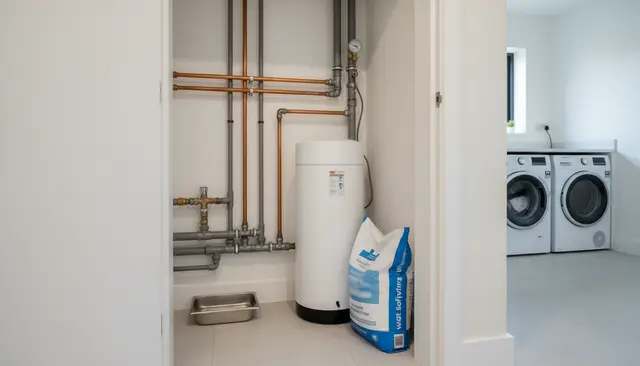
Living in a hard water area in the UK often means contending with limescale, dull laundry, and dry skin. A water softener promises to banish these woes, but is the investment truly worth it? This guide breaks down what a water softener does, its numerous benefits, and the typical costs involved, helping you decide if soft water is right for your home.
What is Hard Water?
Hard water is common across much of the UK, particularly in the South East and East Anglia. It's characterised by a high concentration of dissolved minerals, primarily calcium and magnesium. While not harmful to health, these minerals cause a range of domestic problems, most notably limescale build-up.
How Does a Water Softener Work?
The most effective type of water softener uses a process called ion exchange. As hard water flows through the softener unit, it passes over a bed of resin beads. These beads are charged with sodium ions. The calcium and magnesium ions in the hard water are attracted to the resin beads and exchanged for the sodium ions. The softened water, now free of the hard minerals, then flows into your home's plumbing system.
Periodically, the resin beads become saturated with calcium and magnesium. The softener then goes through a regeneration cycle, flushing the beads with a brine (saltwater) solution. This process flushes the hard minerals down the drain and recharges the resin with sodium ions, ready to soften more water.
The Key Benefits of Soft Water
For Your Home & Appliances
- Eliminates Limescale Build-up: This is arguably the biggest benefit. Limescale won't form in your kettle, shower, taps, or on heating elements in your boiler and hot water cylinder. This helps maintain efficiency and prevents costly damage.
- Extends Appliance Lifespan: Appliances that use water, such as washing machines, dishwashers, and hot water cylinders, will last longer without limescale corrosion and blockages.
- Improves Heating Efficiency: Limescale build-up in your boiler and pipes acts as an insulator, making your heating system work harder to heat water. Soft water can improve boiler efficiency by up to 12%, potentially reducing your energy bills.
- Easier Cleaning: Without hard water minerals, soap scum and watermarks become a thing of the past. Your bathroom and kitchen surfaces, including shower screens and sinks, will stay cleaner for longer with less effort.
- Brighter Laundry: Clothes washed in soft water come out softer, cleaner, and brighter, and colours are less likely to fade.
For Your Skin & Hair
- Softer Skin & Hair: Hard water can leave a residue on your skin and hair, leading to dryness, irritation, and dullness. Many people with conditions like eczema report significant improvements in their skin when using soft water. Your hair will feel softer, look shinier, and be more manageable.
- Reduced Soap Usage: Soap lathers much more effectively in soft water, meaning you'll need significantly less shampoo, conditioner, shower gel, and laundry detergent – typically around 50% less.
For Your Wallet
- Lower Energy Bills: As mentioned, improved boiler efficiency can lead to noticeable savings on your heating costs.
- Reduced Cleaning Product Costs: You'll use less detergent, soap, and specialist limescale removers, leading to savings on your shopping bill.
- Fewer Appliance Replacements/Repairs: Extending the life of your appliances means fewer costly repairs or premature replacements.
- Less Need for Personal Care Products: With softer skin and hair, you might find yourself buying fewer moisturisers and hair treatments.
Is a Water Softener Worth It? Weighing Costs Against Benefits
The initial outlay for a water softener can be a significant consideration. In 2026, you can expect to pay anywhere from £1,000 to £2,500 for a quality unit and professional installation, depending on the model and your home's plumbing complexity.
Running costs are primarily for the salt needed for regeneration, which typically averages around £5 to £10 per month for a family of four. There are also minimal electricity costs for some models and occasional servicing.
When assessing if it's
Frequently asked questions
What is hard water?
Hard water contains a high concentration of dissolved minerals, primarily calcium and magnesium. It's common in many parts of the UK and causes limescale build-up and reduces soap lathering.
How does a water softener work?
Most effective water softeners use ion exchange. As hard water passes through the unit, calcium and magnesium ions are exchanged for sodium ions from resin beads. The resin is then periodically regenerated with a salt solution.
Are water softeners safe to drink from?
Yes, softened water is generally safe to drink. However, due to the slightly increased sodium content, some people prefer to have an unsoftened tap for drinking and cooking, which is typically installed at the kitchen sink.
How much does a water softener cost in the UK?
In 2026, a quality water softener unit plus professional installation typically costs between £1,000 and £2,500. Running costs, mainly for salt, are usually £5-£10 per month for a family home.
How often do I need to add salt to a water softener?
The frequency depends on your water hardness, water usage, and the size of your softener. For an average family, it's typically every 4-8 weeks. Modern softeners often have indicators to let you know when salt is low.
Do water softeners remove beneficial minerals?
Water softeners primarily remove the 'hard' minerals (calcium and magnesium) that cause limescale. They don't remove all minerals, and the trace amounts of sodium added are generally considered negligible for most people.
Need a plumber now? Tell us your emergency and FixDelivered will find and confirm an available local plumber near you, usually within the hour.
Written by the FixDelivered Team. Reviewed by Rupert Lowe, Editor. Last updated 2026-09-05.