Water Under Floorboards? What to Do Now
By The FixDelivered Team · Updated 2026-09-21 · 6 min read
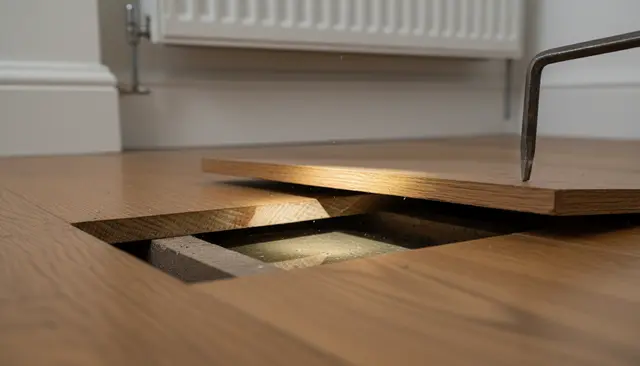
Finding water under your floorboards or seeping up through the floor is an alarming discovery for any homeowner. It suggests a significant leak that, if left unattended, can cause extensive damage to your property's structure, electrics, and furnishings. Acting quickly and correctly is crucial to minimise harm and prevent further issues.
Immediate Actions: What to Do First
Your priority is safety and stopping the water flow. Follow these steps without delay:
- Safety First – Turn Off Electrics: Water and electricity are a dangerous combination. If the water is near electrical sockets, appliances, or light fittings, or if you're unsure, immediately switch off your mains electricity at the consumer unit (fuse box). This is paramount for your safety.
- Stop the Water Source: Locate and turn off your main stopcock to cut off the water supply to your entire property. This is usually found under the kitchen sink, in a downstairs toilet, or near the incoming water pipe, often at the front of your house. If you can't find it, or it won't turn, call for help immediately.
- Contain the Water: Use towels, buckets, or a wet/dry vacuum cleaner to remove as much standing water as possible. The more water you remove, the less damage it can cause.
- Identify the Source (If Safe): While waiting for professional help, try to safely identify the general area of the leak. Is it near a bathroom, kitchen, or an external wall? This information will be helpful for the plumber. However, do not attempt to investigate further if it means disturbing gas pipes or electrical wiring, or if you are unsure of the cause.
When you discover water under floorboards or coming through the floor, your first thought is usually 'who can help me now?' That's where services like FixDelivered can be invaluable. You can tell us your emergency and get connected with a qualified local plumber fast.
Identifying the Source of the Leak
Leaks can originate from various sources, and pinpointing the exact cause can be challenging without proper tools and experience. Common culprits include:
- Burst or Leaking Pipes: This is the most common cause. Old, corroded, or frozen pipes can burst, releasing significant amounts of water. Even a small pinhole leak can cause substantial water accumulation over time.
- Appliance Leaks: Washing machines, dishwashers, and refrigerators with ice makers have water supply lines and drainage hoses that can leak, especially at connections.
- Drainage Issues: Blocked or cracked waste pipes from sinks, showers, or toilets can overflow or leak, causing water to pool.
- Central Heating System Leaks: Leaks from radiators, pipes, or even the boiler itself (though typically the boiler leak would be more obvious near the unit) can travel under floorboards.
- External Water Ingress: Sometimes, water comes from outside – a leaking roof, damaged guttering, or cracks in the foundation/external walls can allow water to seep in and travel under your floors.
DIY Guide: Carefully Lifting Floorboards
If you're confident and it's safe to do so, carefully lifting a few floorboards can help you get a better look at the situation. However, proceed with extreme caution. If there's any doubt about electrical wiring, gas pipes, or structural integrity, stop immediately and call a professional.
Tools You'll Need:- Pry bar or claw hammer
- Screwdriver (if boards are screwed down)
- Safety gloves and glasses
- Torch or headlamp
- Clear the Area: Remove furniture and rugs.
- Locate Joists: Floorboards are typically nailed or screwed into joists.
- Identify Fasteners: Unscrew boards or carefully pry up nailed ones.
- Pry Up Carefully: Gently insert a pry bar into the joint. Apply slow, steady pressure, moving along the board's length.
- Remove Fasteners: Pull out nails or unscrew them, keeping them safe.
- Inspect the Cavity: Use your torch to look for the water source, damaged pipes, or mould. Take photos.
- Ventilate: Allow the area to air out once the water is stopped.
- Unsure or Significant Water: If you're not confident, or there's a large, spreading amount of water.
- Gas or Electrical Concerns: If you suspect or see gas pipes (must be handled by a Gas Safe registered engineer) or electrical cables.
- Unidentified Source or Structural Issues: If you can't find the leak, or the floor feels unstable.
If you're unsure or the situation is complex, don't hesitate to find a local plumber through FixDelivered.
What Happens Next? Professional Help and Damage Control
Once the water is stopped and you've taken initial steps, professional help is essential for repair and mitigation.
- Calling a Plumber: A qualified plumber will accurately locate the leak, repair it, and advise on any necessary pipe replacements. FixDelivered allows you to browse plumbers in your area, compare profiles, and book a professional quickly.
- Water Damage Mitigation: Professional drying equipment (dehumidifiers, air movers) may be needed to thoroughly dry out the subfloor and joists, preventing mould growth and structural damage. If wet for over 24-48 hours, mould remediation might be required.
- Insurance Considerations: Contact your home insurance provider as soon as possible. Most policies cover sudden and accidental water damage, but check for exclusions. Document everything with photos.
Costs Involved (Rough 2026 UK Guides)
The cost of addressing water under floorboards can vary significantly depending on the leak's severity, location, and the extent of damage. As a rough guide:
- Plumber Call-Out Fee: Typically £70 - £150, which often includes the first hour of labour. Emergency call-outs (evenings/weekends) will be higher.
- Leak Repair: A straightforward pipe repair might cost £200 - £400. More complex issues, like replacing sections of piping or dealing with extensive damage, could run into £500 - £1,000+.
- Water Damage Restoration: Professional drying and mould remediation can range from £500 to several thousands, depending on the affected area.
These are estimates, and it's always best to get a clear quote from your chosen professional. With FixDelivered, the plumber's callout fee is agreed upfront and paid directly to them, ensuring transparency.
Preventing Future Issues
Once resolved, consider these steps to prevent a recurrence:
- Regular Checks: Periodically inspect visible pipework, especially under sinks and around appliances, for any signs of dampness or corrosion.
- Insulate Pipes: In colder months, exposed pipes (e.g., in attics, basements, or external walls) are susceptible to freezing and bursting. Insulate them with foam lagging.
- Maintain Appliances: Regularly check hoses and connections for washing machines, dishwashers, and fridges. Replace worn hoses proactively.
- Professional Plumbing Inspections: Consider a periodic plumbing inspection, especially for older properties. A professional can spot potential issues before they become emergencies.
Discovering water coming through your floor or pooling under floorboards is undoubtedly stressful, but immediate and calm action can make a significant difference. Remember to prioritise safety, stop the water, and then seek expert help. For any plumbing emergency, remember FixDelivered can help you get a plumber now, connecting you with qualified local plumbers quickly and efficiently. You can also learn more about how FixDelivered works to streamline your emergency plumbing needs, or explore our plumbing emergency guides for more helpful advice.
Frequently asked questions
How quickly should I act if I see water under floorboards?
Immediately. Turn off electricity and the main stopcock, then contact a professional plumber. Water damage escalates rapidly.
Will my home insurance cover water damage from under floorboards?
Typically, home insurance policies cover sudden and accidental water damage. However, gradual leaks or damage due to lack of maintenance might be excluded. Always check your specific policy and contact your insurer promptly.
Can I dry out the area myself after a leak?
For small, very recent spills, thorough ventilation and dehumidifiers might suffice. For significant leaks, professional drying and moisture detection equipment are usually necessary to prevent mould and structural issues.
Need a plumber now? Tell us your emergency and FixDelivered will find and confirm an available local plumber near you, usually within the hour.
Written by the FixDelivered Team. Reviewed by Rupert Lowe, Editor. Last updated 2026-09-21.